
Peer Reviewed Electronic ISSN: 3079-2959
bcs_journal_cover_image
bcs Aluna Schrift Limited

Search

Showing matching articles 1 - 2 of 2 items
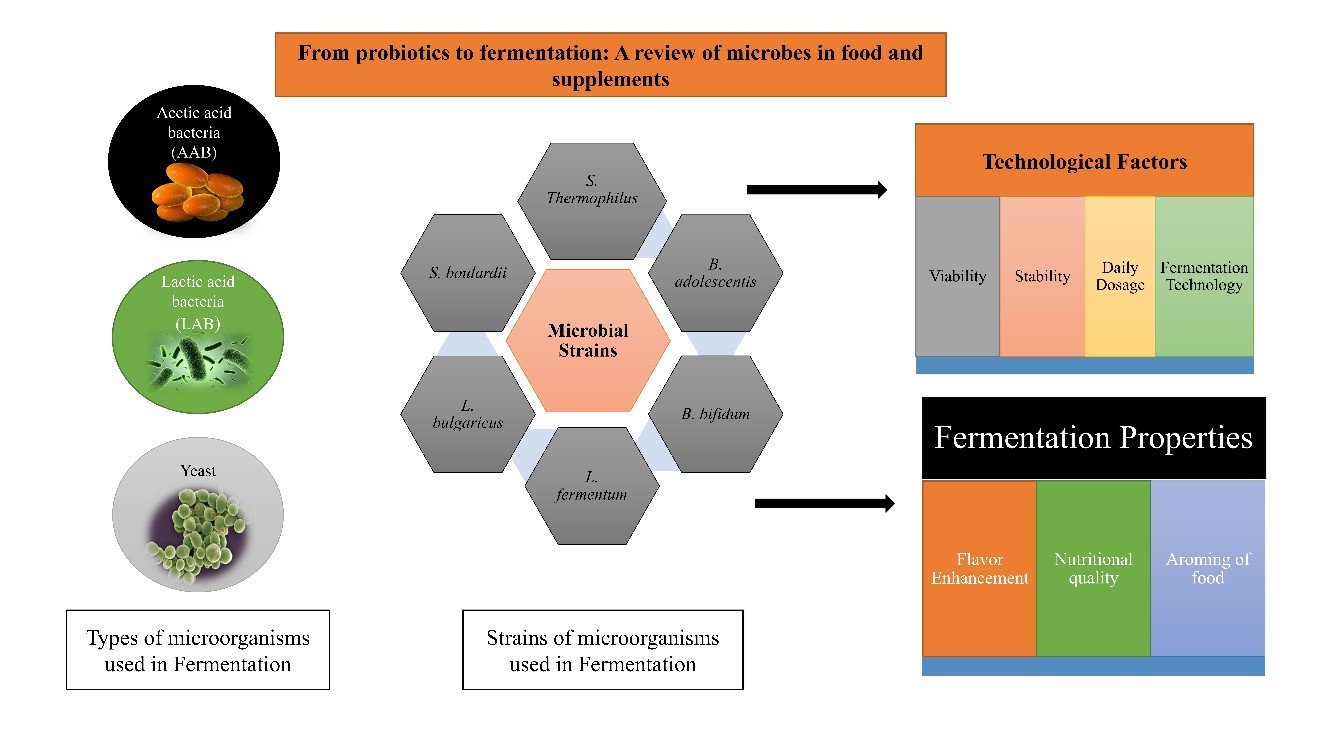
Graphical Abstract
Open Access Pages: 1-17

From probiotics to fermentation: A review of microbes in food and supplements

Ijaz Usman Ali, Sibgha Tul Fatima, Hina Naz, Ahmad Waheed
Abstract

Microorganisms have a crucial role in processing food and preservation, as well as enhancing the nutritional and sensory qualities of food products. Microorganisms are utilized as additives for altering the nature of a substance and have a significant role in fermentation. Molds (e.g., Penicillium roqueforti and Geotrichum candidum), yeasts (e.g., Saccharomyces cerevisiae), and lactic acid bacteria are used to increase the shelf life of foodstuffs and the nutritional quality of processed foods in the fermentation process. Acetic acid bacteria and lactic acid bacteria are used in applied microbiology to increase the flavor of different manufactured foods. Further, bacteria, in the form of probiotics, are involved in the processing of food. Various strains of different bacteria are used as probiotics to increase the quality and preservation of foodstuffs. Bifidobacterium and Lactobacillus are used to produce prebiotics and postbiotics as well. This article discusses the many ways that microorganisms may be added to food and supplements such as probiotics, prebiotics, postbiotics, and symbiotics in order to fulfill the world's food demand and make up for the scarcity of arable land. It also discusses the future prospects and challenges of this field.
A Narrative Review on The Beneficial Effects of Lactobacillus Probiotics Against Necrotic Enteritis in Poultry
Open Access Pages: 2-15

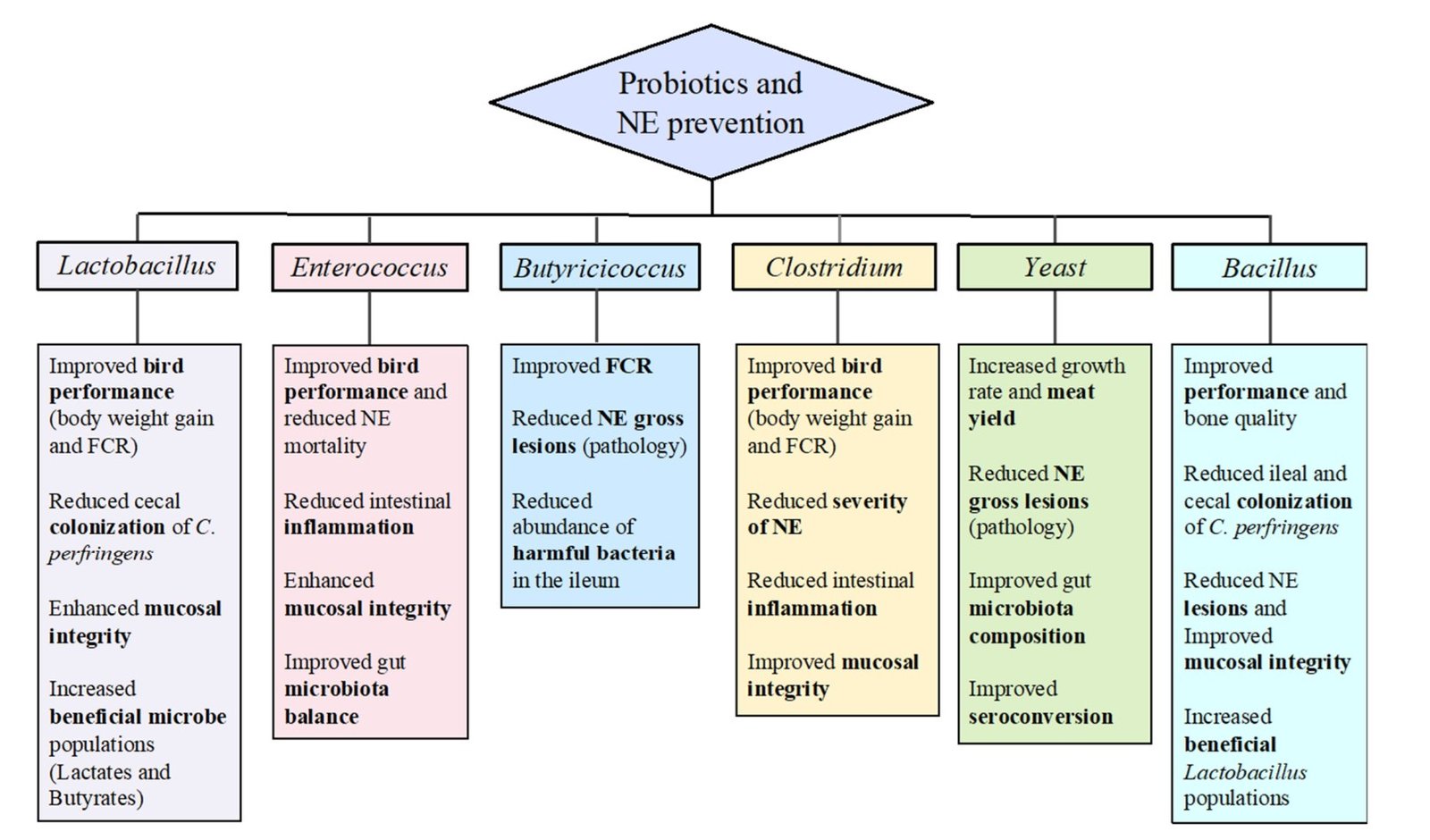
A Narrative Review on The Beneficial Effects of Lactobacillus Probiotics Against Necrotic Enteritis in Poultry

Sehar Razzaq, Qazal Hina, Muhammad Muneeb, Rana Haider Ali, Arooj Fatima, Muhammad Asnan, Waqar Iqbal, Muhammad Tahir Sarfraz Khan
Abstract

Necrotic enteritis is an important disease of poultry that causes economic loss to the broiler industry. Clostridium perfringens is an important bacterium that is responsible for causing necrotic enteritis. Antibiotics are mainly used to control C. perfringens but due to resistance antibiotics are banned in many countries like Canada, Hong Kong, and the European Union. Many alternatives such as probiotics, essential oils, and postbiotics have been developed to control C. perfringens. Among them, probiotics are very important because they can increase beneficial bacteria in the intestine, create a competitive environment in the gut region, and prevent the adhesion and colonization of pathogenic bacteria such as C. perfringens. Probiotics cause immune system modulation, reducing inflammatory markers such as cytokines. Lactobacillus based probiotics also cause weight gain, improve feed conversion ratio, and decrease mortality in poultry which in turn increase profit margin. Several studies have reported that when poultry populations were challenged with C. perfringens then these probiotics prevented intestinal lesions, provided anti-inflammatory effects to the intestine, prevented damage to the villi, and did not allow C. perfringens to form its colony in the intestine. The main aim of this review paper is to explain the updated information on necrotic enteritis, the damages caused to the gut, and the mechanism of actions through which Lactobacilli work against C. perfringens.